
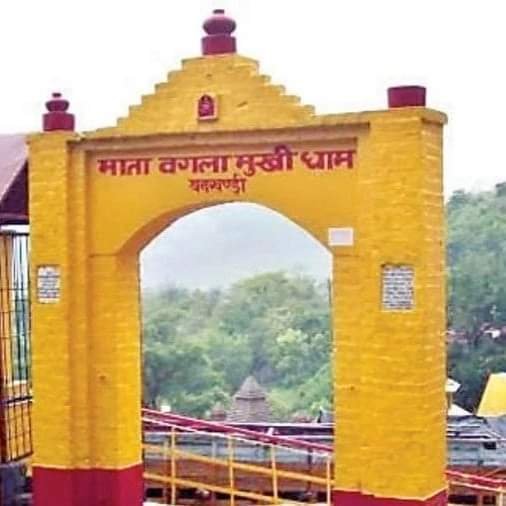
Shakti Peeth Baglamukhi Mandir, Bankhandi, Kangra HP
The Baglamukhi Temple in Kangra, Himachal Pradesh, is a revered Shakti Peeth dedicated to Goddess Baglamukhi, one of the ten Mahavidyas. She’s revered for her power to vanquish enemies and protect devotees from harm.
Temple Highlights
Location : Situated in Bangandi village, about 25-26 km from Kangra town.
Significance : Devotees worship Baglamukhi to overcome obstacles, defeat enemies, and ward off negative energies.
Architecture : The temple features unique architecture with prominent use of yellow color.
Worship : Various rituals are performed, including Havan, Vaksiddhi Puja, and Navagraha Puja.
Temple Timings
– Morning Aarti : 5:00 AM
-Darshan: 6:00 AM – 9:00 PM
– Evening Aarti: 8:00 PM
– Temple Closes: 12:00 midnight
How to Reach
– Air : Gaggal Airport, Kangra (~11 km)
– Rail : Kangra Temple Railway Station (~48 km)
– Road : Connected by bus and taxi services from Kangra, DharmaShala, and other major towns.

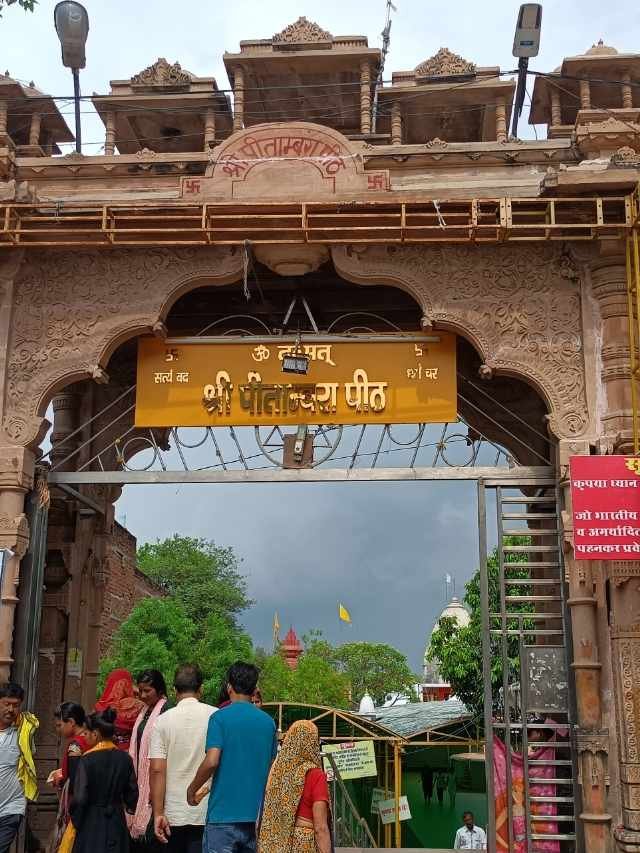
Pitambra Dham, Datiya Gwalior MP
Pitambara Dham Datiya, located in Madhya Pradesh, India, is a revered Siddh Peeth dedicated to Goddess Baglamukhi, also known as Pitambara Devi. This sacred site is believed to be a place of meditation for many mythological and real-life individuals, including the legendary Vankhandeswar Shiva, whose Shivling is said to date back to the Mahabharata era
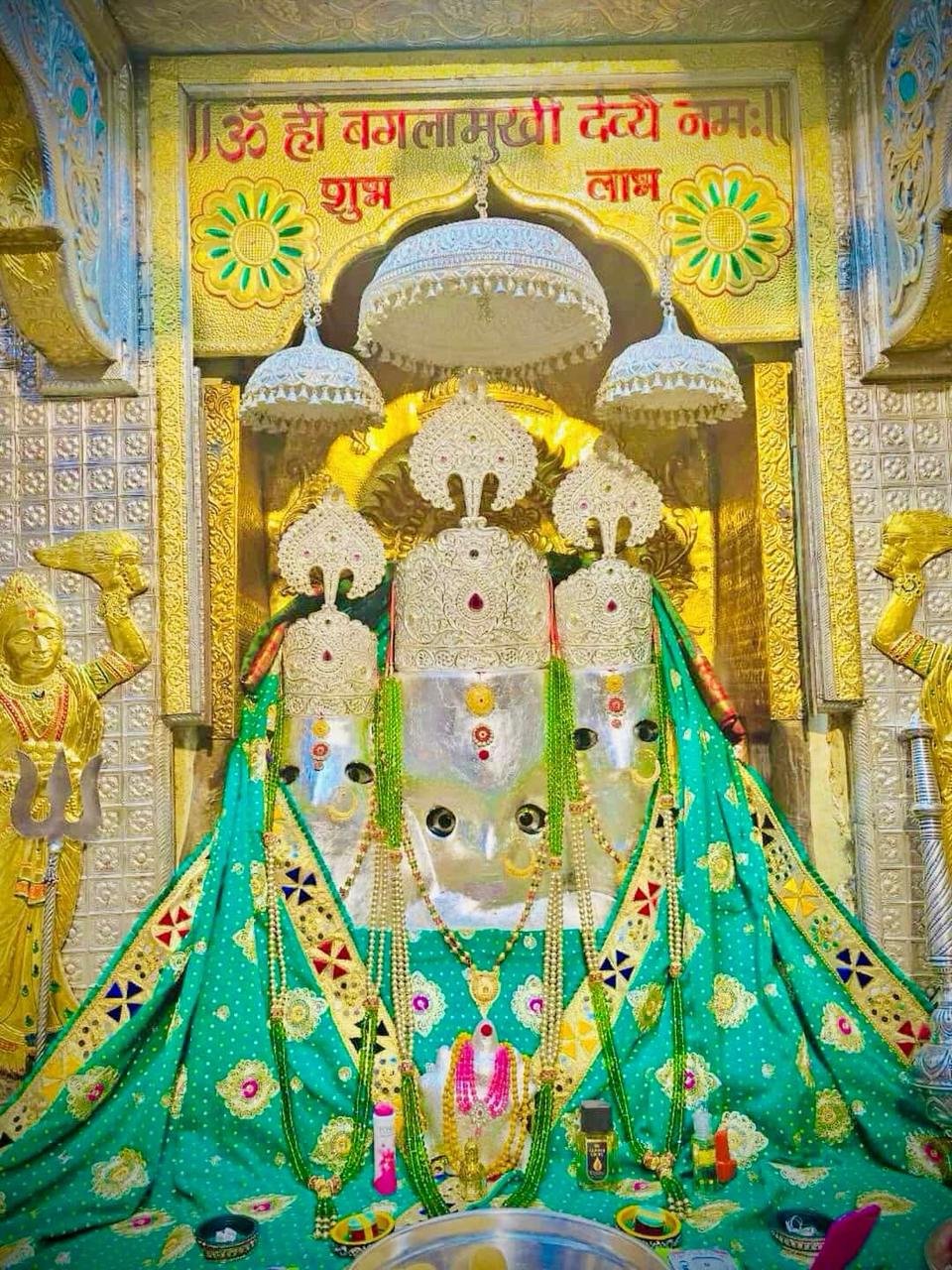
The temple complex, established by Swami Ji Maharaj in the 1920s, features stunning architecture and houses various deities, including Dhumavati, Parshuram, Hanuman, and Kal Bhairav. Goddess Baglamukhi is worshipped here for protection, victory over enemies, and overall well-being.
Key Features:
– Goddess Baglamukhi: The presiding deity, revered for her powers of stambhana (paralysis) and pratishthana (establishment)
– Vankhandeswar Shiva Temple: A Mahabharata-era temple, certified by the Archaeological Survey of India
– Sanskrit Library : Established by Swami Ji, offering ancient texts and scriptures
– Haridra Lake : A sacred lake where Goddess Baglamukhi emerged to calm a destructive storm
Visiting Information:
– Timings: 7:00 AM – 9:00 PM
– Aarti Schedule: Morning Aarti (7:00 AM), Sandhya Aarti (7:00 PM), and Badi Aarti (9:00 PM)
– Location : Datia, Madhya Pradesh, 75 km from Gwalior and 25 km from Jhansi
– Accessibility: Well-connected by road, rail, and air (Gwalior Airport)

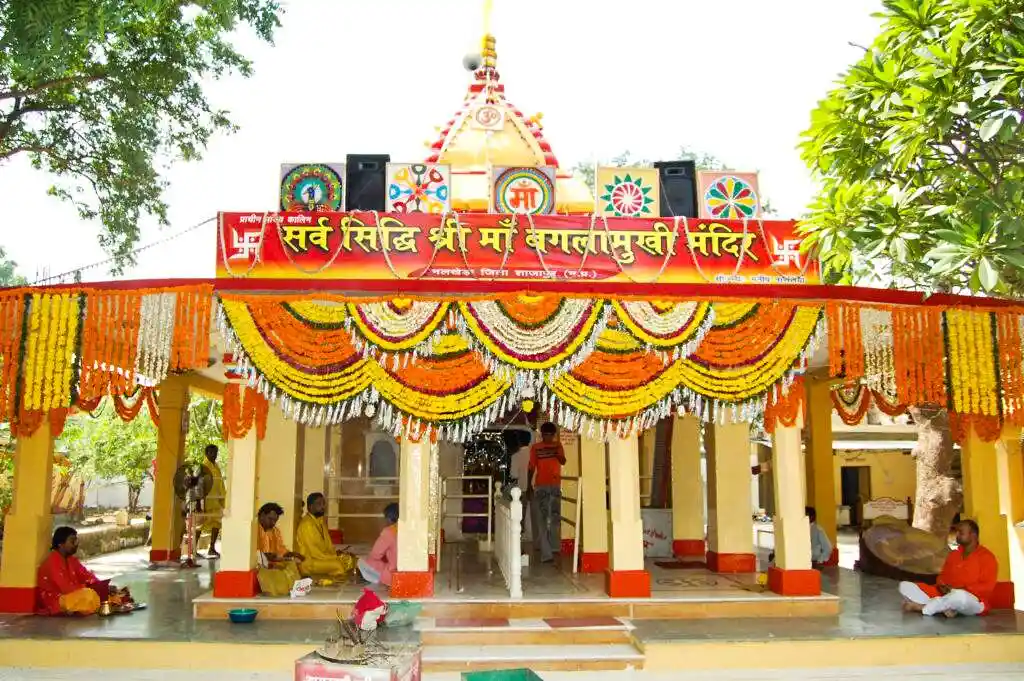
Baglamukhi Mandir, Nalkheda, Madhya Pradesh,
The Baglamukhi Mandir in Nalkheda, Madhya Pradesh, is a revered Hindu temple dedicated to Goddess Baglamukhi, one of the ten Mahavidyas. This ancient temple, believed to be over 5,000 years old, is situated on the serene banks of the Lakhundar River and is a significant Shakti Peeth
History and Significance
The temple’s history dates back to the Mahabharata era, with legends suggesting it was established by King Yudhishthir under Lord Krishna’s guidance to gain victory in the Mahabharata war. Goddess Baglamukhi is worshipped for her protective powers against harm, negativity, and adversaries, making it a popular destination for devotees seeking strength, protection, and success
Architecture and Deities :
The temple features a unique triad structure with Goddess Baglamukhi at the center, flanked by Goddess Lakshmi and Goddess Saraswati. It also houses statues of Krishna, Hanuman, and Bhairav, enhancing its spiritual significance
Temple Timings and Festivals
– Darshan Timings : 6:00 AM – 10:00 PM
– Aarti Timings : Morning Aarti (6:00 AM), Evening Aarti (7:00 PM)
– Festivals: Navratri, Baglamukhi Jayanti, Tuesdays, and Fridays
How to Reach
– Air : Devi Ahilyabai Holkar International Airport, Indore (156 km)
– Rail: Ujjain Junction (102 km)
– Road : Well-connected by bus and taxi services from Indore, Bhopal, Ujjain, and other major cities

Kamakhya Temple , Nilachal Hill ,Guwahati, Assam.
Kamakhya Temple is one of the most revered Shakti Peeths in India, located on Nilachal Hill in Guwahati, Assam. It’s dedicated to Goddess Kamakhya, an incarnation of the Mother Goddess Shakti. The temple is famous for its unique tantric traditions and the Ambubachi Mela, a major annual festival celebrating the goddess’s fertility and menstruation.
History & Significance
– Shakti Peeth Status : According to legend, the yoni (female organ) of Sati fell here when Lord Shiva carried her body after her self-immolation. Thus, the temple symbolizes feminine energy.
– Historical Roots: The current structure dates back to the 16th century, built by the Koch king Naranarayan. However, references to the site exist in ancient texts like the Kalika Purana.
– Tantric Importance: It’s a key center for Tantric Buddhism and Hinduism, attracting sadhus, yogis, and pilgrims from across the country.
Architecture & Style:
Assamese temple architecture with a beehive-shaped shikhara.
– Layout : Consists of four chambers – garbhagriha (sanctum), mandap (hall), natamandir (performance space), and bhogmandir (offering hall).
– Iconography : The deity is represented by a yoni-shaped stone rather than an idol.
Festivals
– Ambubachi Mela: Held in June, it marks the goddess’s annual menstruation. The temple closes for three days, then reopens with grand celebrations.
– Durga Puja: Celebrated with grandeur in autumn.
– Diwali & Navratri : Also observed with special rituals.
Visiting Info
– Location: Nilachal Hill, Guwahati, Assam.
– Timings :
– Morning: 8:00 AM – 1:00 PM
– Evening : 2:30 PM – 5:00 PM
– Best Time to Visit : October to March (post-monsoon).
– How to Reach:
– Air: Lokpriya Gopinath Bordoloi International Airport (Guwahati) – 20 km.
– Rail: Guwahati Railway Station – 4 km.
– Road: Well-connected by bus and taxis.
Cultural Notes
– Photography is restricted inside the sanctum.
– Dress modestly and respect local customs, especially during Ambubachi Mela.
– The temple complex also houses smaller shrines to other deities like .Baglamukhi along with all ten mahavidhya
Gallery
Photos capturing the sacred Maa Baglamukhi temples’ serene beauty.
